Skip to content
Senior Living Liability

TL;DR

  • The care is still professional liability, but you do not control the premises, and supervision is remote rather than on site.
  • Non-owned auto is the coverage most often missing: caregivers drive their own cars on agency business, and their personal limits are frequently minimal.
  • Wage and hour, principally travel time between clients and off-the-clock documentation, is the employment exposure that actually arrives, and it is largely excluded from employment practices policies.

Care setting

Home care and home health. No building, same duty.

Removing the building removes some exposures and adds others. There is no physical plant to maintain, no licensure physical plant standard to rebuild to, and no congregate setting. What remains is the care itself, delivered one to one, in an environment the agency does not control, by staff who are supervised remotely.

That changes the shape of the program rather than its existence. Professional liability still does the heavy lifting. Auto becomes unusually important because the work involves driving. And the employment lines matter more than in most settings, because the workforce is dispersed, mobile, and paid in a way that generates wage and hour exposure almost structurally.

Last updated

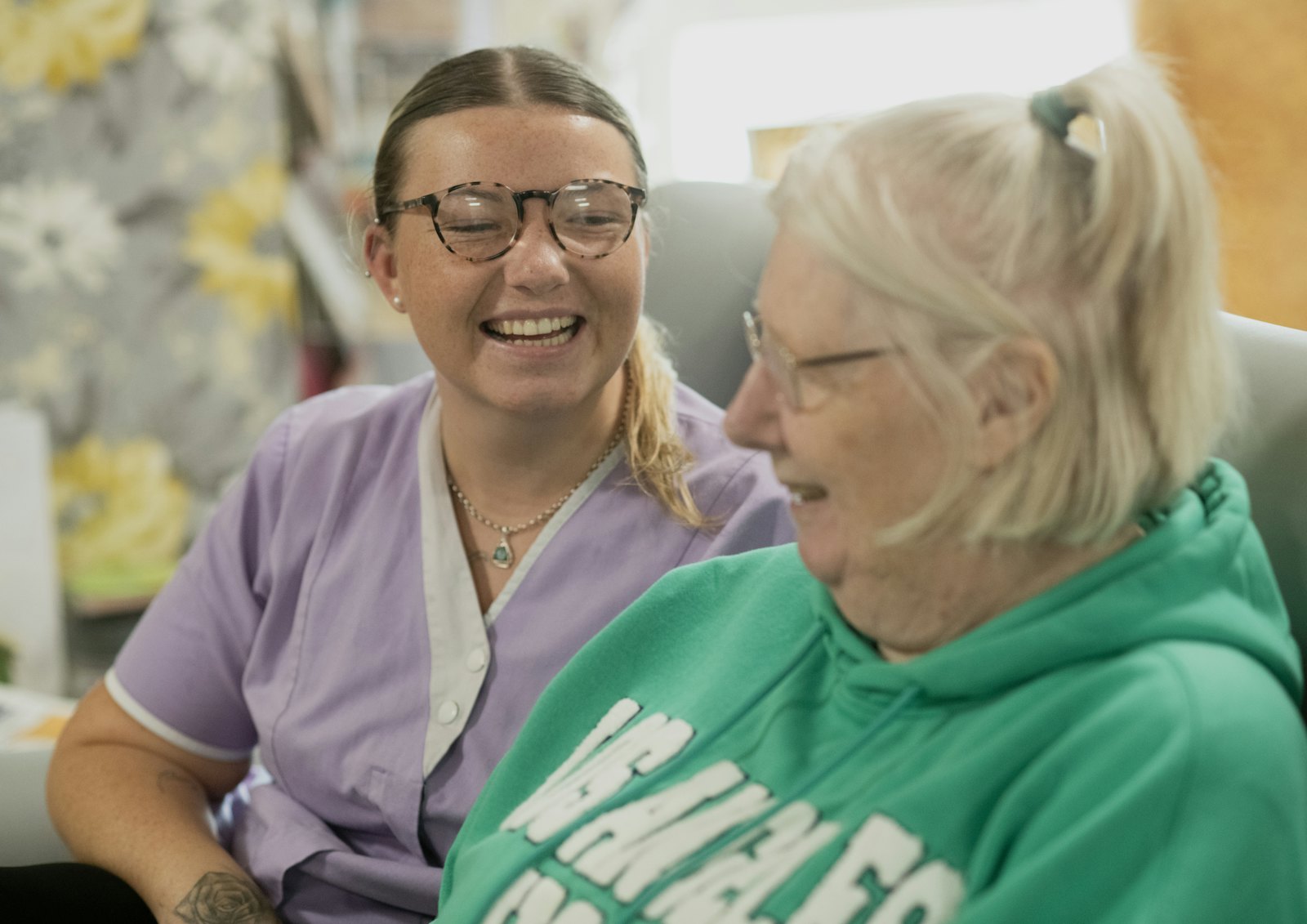
A caregiver and an older client sitting together and laughing during a home visit.
In the home there is no second staff member in the room. That changes the risk profile and, when an allegation arises, it changes the evidentiary position of everyone involved.

Failure mode 01

Caregivers drive their own cars, and the agency has no auto policy.

An agency with no owned vehicles reasonably concludes it has no fleet exposure. But caregivers drive personal vehicles to clients, between clients, and often with clients in the car for appointments and errands.

When there is an accident, the caregiver personal policy responds first and the agency sits above it. Personal limits are frequently minimal, and a claim involving an injured elderly passenger is not a minimal claim.

Solution

Hired and non-owned auto, plus a driver standard you actually enforce.

Add hired and non-owned auto liability so the agency exposure above the personal policy is covered. This is inexpensive relative to what it addresses and is one of the most commonly missing coverages in this segment.

Then confirm your driver qualification and motor vehicle record checking practice matches what the policy assumes, because a mismatch there is a common declination point after a loss. If the policy contemplates annual record checks, do annual record checks.

Failure mode 02

The pay practices are the claim.

Home care wage and hour exposure arises from how the work is structured rather than from any manager conduct. Travel time between clients, documentation completed after a visit ends, on-call arrangements, and misclassification of coordinators as exempt each apply uniformly across a role.

That uniformity is what turns one complaint into a collective action, and most employment practices policies exclude wage and hour damages entirely while giving back only a modest defense sublimit.

Solution

Audit timekeeping before a claim, not during one.

Review whether travel time between clients is captured and paid, whether post-visit documentation time is recorded, and whether every exempt classification can be defended on actual duties rather than job title. Fix what the audit finds and keep the record of both.

On the insurance side, know what the sublimit is, whether it is defense only, and whether it shares the main employment practices aggregate. Then treat it as funding the first response rather than as a solution.

Failure mode 03

Supervision is remote, and the record shows it.

In a facility, a supervisor can observe care directly. In home care, the agency knows what happened from what the caregiver documented, which means the documentation is not just a record of the care, it is the only evidence of it.

A claim alleging that a caregiver missed a change in condition, or was not competent for the assigned task, is answered from the care plan, the visit notes, the competency assessment and the supervisory visit record. Agencies that keep those thinly have very little to work with.

Solution

Make the supervisory visit a real, recorded event.

Documented competency assessment at hire and on assignment change, a defined supervisory visit cadence with a recorded outcome, and a clear escalation path for reporting a change in condition are what convert a remote supervision model into a defensible one.

Underwriters ask for exactly these, so the work does double duty: it improves defensibility and it improves how the agency is priced.

Market access

Placed as a care provider, not as a staffing company.

Home care agencies are frequently quoted by markets that treat them as light-duty staffing businesses, which produces a program without an adequate professional services grant and without meaningful auto.

We place through markets that write home care and home health specifically, so the professional liability grant reaches the care actually delivered, hired and non-owned auto is present, and the employment lines are sized against a dispersed hourly workforce rather than against revenue.

Programs placed through the specialty markets that write senior care across California, New York, Texas, Florida, Illinois, and Ohio.

Frequently asked

Home care insurance questions

What is different about insuring care delivered in a client home?

You do not control the premises. That removes some exposure and adds others: the care itself is still professional liability, but property conditions belong to the client, staff travel between homes creates auto exposure, and supervision is remote, which changes both the risk and how a plaintiff frames it.

Why is non-owned auto so important for home care?

Because caregivers drive their own vehicles on agency business constantly. Their personal policy is primary and yours sits above it, and personal limits are often minimal. Confirm hired and non-owned auto is included, and confirm your driver qualification and motor vehicle record checking practice matches what the policy assumes.

What drives employment claims in home care?

Wage and hour, principally travel time between clients, off-the-clock documentation, and misclassification. Those practices apply uniformly across a role, which is what turns one complaint into a collective action. Most employment practices policies exclude wage and hour damages and give back only a small defense sublimit.

Authoritative references

Primary regulatory sources

Free coverage review

Send the declarations page. Start with whether you have non-owned auto.

It is the coverage most often missing in this segment, and the fastest thing to confirm. One business day, no obligation.